Thursday, May 14, 2026

Author Spotlight - Nestor Eguez

  • Kalima


  • About the Award-Winning Author:

  • Nestor Eguez sent the following message at 2:04 AM
    View Nestor’s profileNestor Eguez

    Nestor Eguez is an Electronic Engineer from Uruguay, South America. Thirty years ago, he and his family immigrated to the USA in search of a better life. From there, he worked as a Technology Instructor at vocational and adult schools. One day, while helping his children with a script for a school puppet play, this story was born. The short tale was supposed to be performed in a school theatre, for an audience of teenagers, teachers and a few parents. Instead, after a long, bumpy road, it is close to touching millions around the world today.

  • Title of Book: Kalima: The Secret of the Jungle

  • https://www.amazon.com/Kalima-Secret-Jungle-Nestor-Eguez/dp/0692415041

  • This is the story of Kalima, a young zebra born in a corner of the jungles in Kenya. She is the last descendant of a very special breed called The Guides, well known as protectors of the herd, and always staying alert. She has recently been made an orphan due to a lion attack that killed off her mom. Her grandmother becomes her caretaker, as she is an old and wise zebra who holds great knowledge. Kalima loves flowers, chasing butterflies and playing with her friend Norba, the youngest member of the elephant pack. But as one of 'The Guides,' she is soon going to receive a big responsibility and keep a very important secret hidden in the jungle. Unfortunately, looks like she doesn’t have a clue about it. The first of a trilogy, this Fantasy YA book ingeniously explores humanity's perception of its respect for nature and animal rights.

  • Reviewed in the United States on November 24, 2015

    Format: Paperback
    I was fortunate to have been given a copy of this wonderful book by the author, 
  • and I must say I am delighted to review it here. 
  • It is a wonderfully and creatively told story that would make a beautiful Christmas present, 
  • or any present for a child, a child of any age, for the child in me loved this book. 
  • The character Kalima comes alive off the page, and you can't help but fall in love. 
  • And fall in love you will when you pick up this absolutely delightful book. 
  • Can't wait for the next from the very talented Nestor Equez.

Shobana's Note: This story, with 5-star ratings on Amazon, is an absolute must-read. 
Kalima is an adorable zebra from a very special descendant called "The Guides." 
Read the sample, gift the book - it's a book for everyone who needs a little adventure in their lives.

~~~~~~~~~~~~~~~~~~~~~~~~~~~~~~~~~~~~


**New**

Need a Book Reviewed?
I have commenced my book review service
again. USD10.00 for 200 pages. Reviews will be posted on Amazon. Email: shobanagomes@gmail.com

A Free Story to Read.

What happens when a Malaysian Malayalee travels to the vibrant streets of Trivandrum to study? It'd be a journey filled with humour, heart, and a love that crosses oceans.

My latest story, Falling In Love With A North Indian, is currently a featured entry in the Inkitt Novel Contest—and you can read it for FREE!

Experience the magic of Trivandrum and the exotic shores of Malaysia in this cross-cultural romance.

📖 Read for free here: https://www.inkitt.com/stories/1733283

If you enjoy the journey, please leave a review and help me share this story with the world!

#FallingInLoveWithANorthIndian #FreeReads #RomanceBooks #MalaysianAuthor #Trivandrum #Inkitt #CrossCulturalLove #ShobanasBooks #FreeBooktoRead 

Sunday, May 10, 2026

When You find Love Unexpectedly, It Changes Your Whole Life.

Here's a love story I'd like to share with you;

I have entered it for a contest

If you liked it, after reading, please leave a like and a review.

Thank you.


Men go to great lengths to woo the women they are attracted to.

In this story, Aarav, a journalist-turned writer, is a North Indian from New Delhi. He sees a beautiful girl on arrival at Trivandrum airport. He had flown down from Singapore (where he had gone for a business meeting) to attend a seminar by Chetan Bhagat.

Anjali is a Malaysian Indian who has a beautiful smile and long, dark hair with brown highlights that look good on her.

Why do these kinds of traits attract a man to a woman?

In the context of romance in literature and the dynamics between Aarav and Anjali, the why behind his instant attraction goes beyond beauty. It is about the symbolism in features and the psychology of the observer.

As an author who uses the Faction method of Storytelling, I have imbued these details that a writer like Aarav, trained to notice, would pick up on immediately.

1. The Power of the Duchenne Smile:

Psychologists consider "The Duchenne Smile" as the hallmark of genuine, authentic happiness. It is named after the 19th-century French neurologist Guillaume Duchenne, who used electrical stimulation to map how facial muscles create emotions. He discovered that a truly spontaneous smile of enjoyment involves two specific muscle groups working together:

Aarav is a journalist-turned-writer. His eyes are trained to look for authenticity. A beautiful smile often signals more than just happiness; it signals approachability and emotional intelligence. If Anjali’s smile reached her eyes, it told Aarav that she was genuine in a world of curated appearances. For a man far from home (New Delhi to Trivandrum), that warmth acts as a welcome, even if it wasn't directed at him.

The description of her long, dark hair with brown highlights is a powerful visual detail: The Long, Dark Hair is a classic symbol of heritage, health, and traditional beauty, especially in a South Indian setting like Trivandrum. It grounds her in her culture. The Brown Highlights represent a modern, individualistic touch.

To a writer like Aarav, this suggests a woman who respects her roots but isn't afraid to experiment or express her own personality. This different quality—the blend of the old and the new—is often what makes a person stand out in a crowd. Because Aarav is a writer, he doesn't just see a girl; he reads her like a protagonist.

Being at the airport the same time as her arrival and attending a Chetan Bhagat seminar puts Aarav in a storytelling mindset. He is already looking for inspiration. When he guesses she is different, he is responding to her aura or vibe. This is often a combination of how she carries herself with confidence, how she interacts with her surroundings (grace), and the specific physical trait (the highlight) that breaks the expected pattern of telling the story.

There is a subtle psychological pull in the North-meets-South dynamics. To a North Indian from the bustling, fast-paced New Delhi, the soft, evocative atmosphere of Kerala, reflected in a girl’s appearance, can feel incredibly exotic and refreshing.

In short, Aarav isn't just attracted to her hair and smile; he is attracted to the story those features tell. He sees a woman who is vibrant, authentic, with a unique blend of cultural depth and modern flair. This girl was different, he guessed the first time he saw her. She had a beautiful smile and long, dark hair with brown highlights.

A story worth your time. Read all about Anjali's trip to Trivandrum and her meeting with Aarav - the North Indian who was a distraction in an old-fashioned way.

https://www.inkitt.com/stories/1733283

Read Chapter 7 on Shobana Gomes' Bookstore:https://shobanagomesbookstore.blogspot.com

Read two 100-word poems on SHOBANA: https://shobanagomes.blogspot.com.

Thank you. I hope you enjoy the story. Please leave a like and review if you did, on the Inkitt website. I entered the book for a contest and would love to know what you think. https://www.inkitt.com/stories/1733283. Have a great week ahead.

-shobana-

Friday, May 1, 2026

The LACCS-UK Forum was a great success!

The LACCS-UK, Worldwide Women's Forum, was a success on the 30th of April. I had the distinct honour of being interviewed by the Hon. Emeritus Professor JR Monroy, who is the Founder and Hon. Chair of LACCS-UK and its worldwide subsidiaries. I was representing Malaysia in the Forum. 

Alongside the speaker from Brazil, we were interviewed for our respective roles as women professionals in modern society. I was asked to speak about my books on literature and my quote, 'Treasure the poetic moments of your life, we will never experience them twice.' I spoke about the Malaysian landscape, and the iconic, classical poetry of the Malays - the pantun, and the Ghazal music.

I'd like to share the first thematic question by the Professor, and my answer here:

1. As I said before in our Women’s Forum, we are ignorant about Malaysian literature and poetry. However, before you can talk about your work, my first thematic question is:

Why and since when did you decide to be a professional writer and a poetess? Please give us a summary.

Answer: Shobana Gomes

Good Evening, Professor Monroy, and my distinguished fellow speaker from Chile. It’s a pleasure being with you here this evening. It is a great honour to represent Malaysia in this lustrous forum. Thank you for the privilege and the invitation. My name is Shobana Gomes, and I am a poet and writer. 

To begin, I’d like to say a few words about the Malaysian landscape and literature.

Malaysia is a multi-cultural and multi-racial country. There are 13 states and three Federal Territories. Kuala Lumpur is the capital city. There are three main races: the Malays, Chinese, and Indians and we are rooted in indigenous heritage with the Orang Asli of the peninsula and the vibrant tribal societies of Sabah and Sarawak.n

Islam is the religion of the Federation - the official religion of the country. The people of different religions are free to practice their faiths without fear or favour, as enshrined in our constitution. There are nine Malay rulers, and they are the heads of Islam in their respective states, while the King, appointed to a rotational monarchy every 5 years, is the Supreme Head of Islam. The country’s administration is led by the Prime Minister and his cabinet ministers.

Our country is infamous for the iconic pantun - the classical poetry of the Malays. It has 4 lines - the first two lines are the foreshadower while the last two lines carry the message of the poem. Malay poetry is deeply metaphorical and relies on the natural landscape for its imagery. We have the syair, the prose poem that tells a continuous, direct story often used for romantic epics, historical accounts of war, and religious instruction. It is likened to the documentary film of the ancient Malay world.

The Ghazal is the ancient music of Islamic influence. It is famous in the Royal State of Johor, in the Southern region of Malaysia, the state of our present-day King. It uses the Gambus, the Arabic lute, the violin, and the Gendang or Tabla (Malay/Indian drums)

The Ghazal music is traditionally performed in royal courts and weddings. And in our Ghazal music, you can hear the heartbeat of the Middle East, India, and the Malay world - combined.


Then I went on to speak about why I entered the writing industry and the recognition I gained as I progressed as an author, poet, and writer. Here's a part of my answer to my second question about literature.

Q2 Why did you include Children’s Literature in your work?

Children’s literature began with my reading stories to my two daughters when they were young. They’d never go to sleep without me telling them one, and I had to make up the stories so they would sleep. Only when I end the stories with “And the story is over” will they fall asleep. That gave me my first experience in crafting children’s literature in my mind.

Children’s literature encourages reading from infancy, which is why I write it.  When you read a story to a child, they learn as we read, and later, when they begin reading on their own, they learn to create stories as I did. They grow into informed adults, and we gain an educated population nurtured by a love for reading. 

Children must be taught to imagine so they love to learn, and appreciate life. Imagination is a cognitive necessity. Storytelling is one of the best ways to inculcate a love for reading and imagining. Storytelling helps children visualise scenes and ignites their curiosity and creativity, thus helping them craft their own stories in their heads. Once they start imagining and visualising, they become lifelong readers. Their learning becomes clearer and awakens their 5 senses, to see, hear, touch, smell and taste. Therefore, children’s literature is crucial for the betterment of society. I write them to educate, inspire and entertain young minds. (to be continued).

I had a lovely surprise when I woke up the next morning to get a commendation letter from the Hon. Professor. 


April 30th, 2026: I had the privilege and honour to represent Malaysia (the first poet to be interviewed) at the LACCS-UK, LACCS Worldwide Women's Forum on women's professional role in modern society and literature (especially, my role from business, transitioning to a poet and author, and with regards to my literature books alongside my fellow speaker from Brazil. I was interviewed by the Hon. Emeritus Professor JR Monroy, Founder and Hon Chair LACCS-UK, and Subsidiary LACCS-WORLDWIDE, Social Scientist, Analytical Historian, Cultural Researcher. 

Monday, April 20, 2026

A Blue Thoroughfare Carved Between the Desert and the Peaks


Asha overlooking the Straits of Hormuz

Since it's National Poetry Month, and the theme this year is Land and Sea, I thought I would compile a few facts about the Straits of Hormuz.

The Strait of Hormuz is the most important chokepoint on Earth for global trade. The narrow, crescent-shaped waterway connects the Persian Gulf (to the west) with the Gulf of Oman and the Arabian Sea (to the east). It is only 21 miles wide (33km) at its narrowest point. It is known as the Aortic Valve of 2026, as canal gold runs through its veins. Roughly 20-25% of the world’s total oil consumption passes through this one narrow gap. It is called the "Canal for Gold" because any disruption here instantly changes the price of everything globally—from the fuel in a vehicle in Subang Jaya to the price of bread in Bristol.

Did you know:

After World War II, as the world moved away from coal and toward petroleum, production surged in the Gulf states (Saudi Arabia, Kuwait, Iraq, UAE). The stakes were amplified economically as more oil fields were discovered. Because these countries are largely landlocked by deserts or mountains, the sea was the transit channel for the massive amounts of fuel transported to the West and the East.

In 1908, the "Gold" (Oil) was first discovered in commercial quantities in Iran (Masjid-i-Sulaiman). And, suddenly, this ancient gateway became the only exit for the region’s massive underground wealth.
As such, the straits became the world's most vital supply artery.

A Blue Thoroughfare Carved Between the Desert and the Peaks:

The blue thoroughfare of the Strait of Hormuz is more than a shipping lane; it is a vital, liquid bridge connecting the cradle of ancient civilisation to the modern world. Carved by the "bendy ruler" of tectonic pressure, this narrow passage serves as a high-stakes conveyance for the world’s "liquid gold."

The thoroughfare represents the physical manifestation of Asha. Asha is the divine order where the sea creates a rhythmic path through rugged, arid land. Despite this, the blue thoroughfare remains the earth’s most essential supply artery, a place where the deep blue of the water meets the white heat of the desert, and where the pulse of global survival is measured in every transit. 

Here's a brief description of Asha:

In Zoroastrianism, Asha is the profound concept most often described as "Cosmic Order" or "Divine Truth."

  • Asha is the fundamental law that keeps the universe functioning correctly. It denotes the opposite of chaos. It's the reason why the sun rises, the tides turn, and the seasons change and the Divine Rhythm.

  • Druj (The Lie or Chaos) seeks to distort and destroy, while Asha aligns everything with the highest, truest purpose. 

  • Asha is the moral compass that humans, who live according to the concept, act with righteousness, leading to the path of Good Words, Thoughts, and Deeds.

  • The Symbol of Fire is linked spiritually to light and fire. While Asha purifies the soul and illuminates truth, the fire purifies and provides clarity.

  • Asha is the invisible force that ensures the bendy ruler in the Earth's crust doesn't break, and the waters of the Strait continue their rhythmic flow despite the chaos of human conflict.

sources: Google

529 words.

-shobana-

NEW!

On Shobana Gomes' Bookstore
Earth Day 2026, Nature Poems
RM2.99


On Shobana: Under the April Rain-Soaked Sky

https://shobanagomes.blogspot.com/2026/04/under-april-rain-soaked-sky.html


Get your Digital Copy of The Faction Revolution Modules 1-3 at Shobana Gomes' Bookstore for only USD0.99/RM3.85. Learn about the unique FACTION storytelling method I used to raise my standards in writing. Thank you.

Sunday, April 12, 2026

Easter in Kota Kinabalu, Sabah

Sabah is also known as the land below the wind. Home to Mount Kinabalu, the highest peak in South-East Asia, a UNESCO World Heritage site, it is the melting-pot of over 30 ethnic groups, including the Kadazan-Dusun, Bajau, and Murut.

Sabah has some of the most vibrant and world-class diving sites, which attract tourists from around the world.

It is celebrated for its extraordinary biodiversity, rugged landscapes, and a rich cultural tapestry that defines its unique identity in Malaysia.


The Waterfront in Gaya Street, Kota Kinabalu


On Easter Sunday, I walked along the waterfront in Gaya Street in Kota Kinabalu, Sabah. I can't explain the blue of the waters that mesmerised me on that hot, sunny afternoon, which camouflaged the heat and left me wanting to take a ferry ride to the Gaya Islands on the opposite side. That morning, after attending mass at the Sacred Heart Cathedral, we enjoyed the sumptuous, tasty, sweet and sour tomato fish soup noodles at the well-known Api-Api Centre, just a short walk from the waterfront. A friend insisted that we try the famous cuisine and said we should never leave without tasting it, and we were not disappointed.

This was the first time we spent Easter without mum, so it was good to be away and witness a different side of Malaysia. It was a lovely break.

Everyday scenes at Gaya Street. You must go there!

Easter Mass at KK Sacred Heart Cathedral. 

The cathedral serves as a central hub for the Roman Catholic community in Sabah, hosting services in several languages to accommodate the diverse local population. Established in 1903, the church has grown into the impressive structure that stands today.
The service was well-attended, and the ceremony was beautiful, making this Easter all the more special.
One could feel the peace, serenity, and holiness that exude when sitting inside the magnificent church.
Truly an awesome time spent in the presence of God.

Here's wishing you and your loved ones a very Happy & Blessed Easter.

-shobana-


On SHOBANA
Gaya Bay's Guests of Honour
https://shobanagomes.blogspot.com


Get my book, The Faction Revolution Modules 1-3
here.
Only USD0.99
Thank you.


Author Spotlight - Nestor Eguez

Kalima About the Award-Winning Author: Nestor Eguez sent the following message at 2:04 AM View Nestor’s profile Nestor Eguez       Nestor Eg...

Children of War

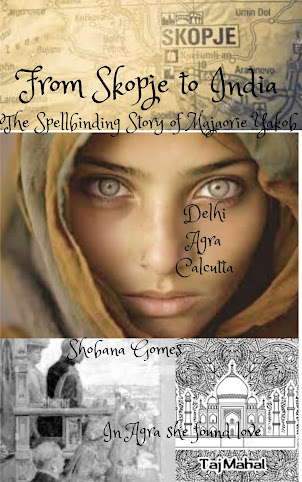
From Skopje to India

From Skopje to India
Majaorie, the Albanian, starts a new life. Read about her intriguing story.

From Skopje to India

Christmas Tales & Wishes